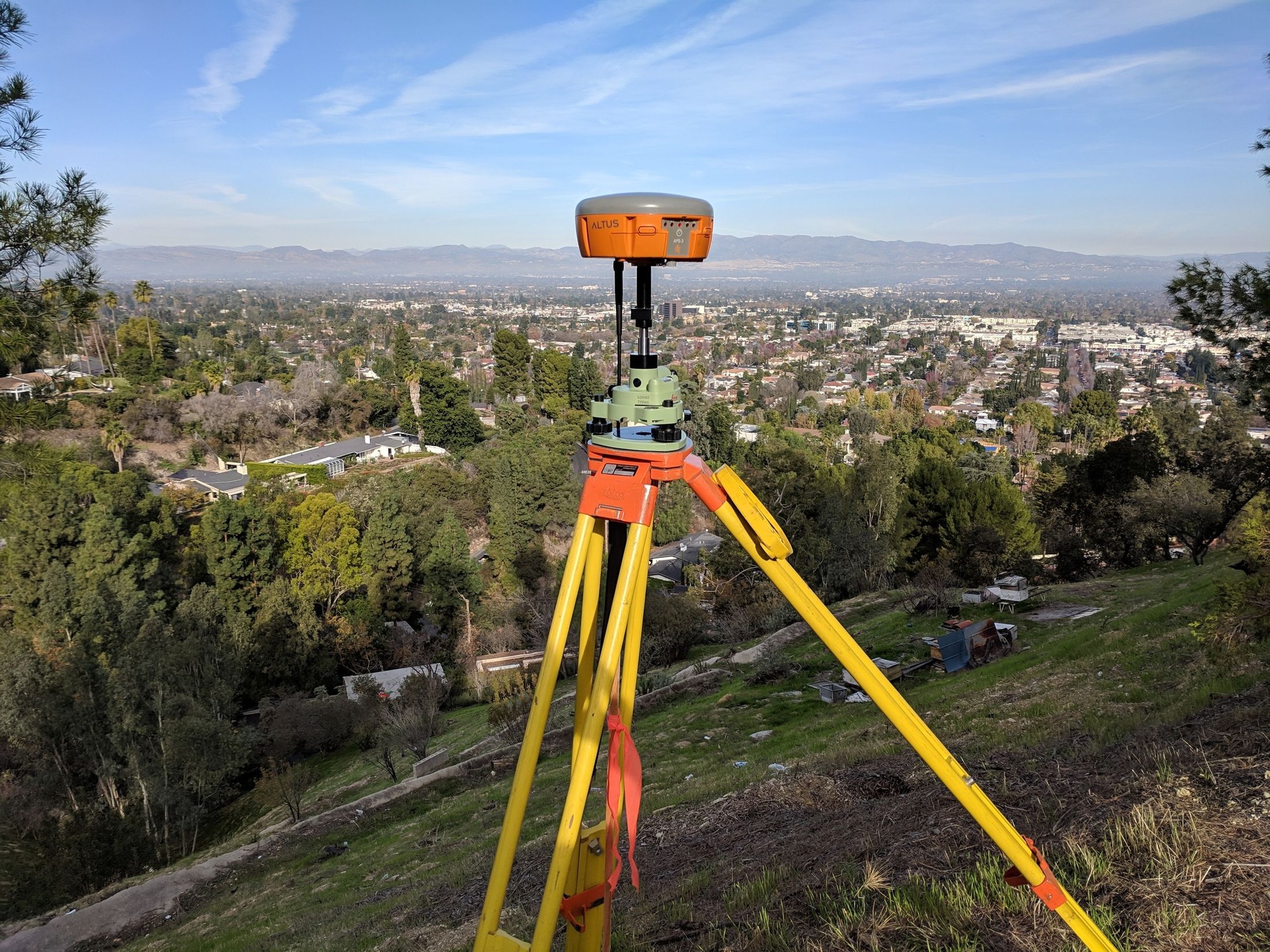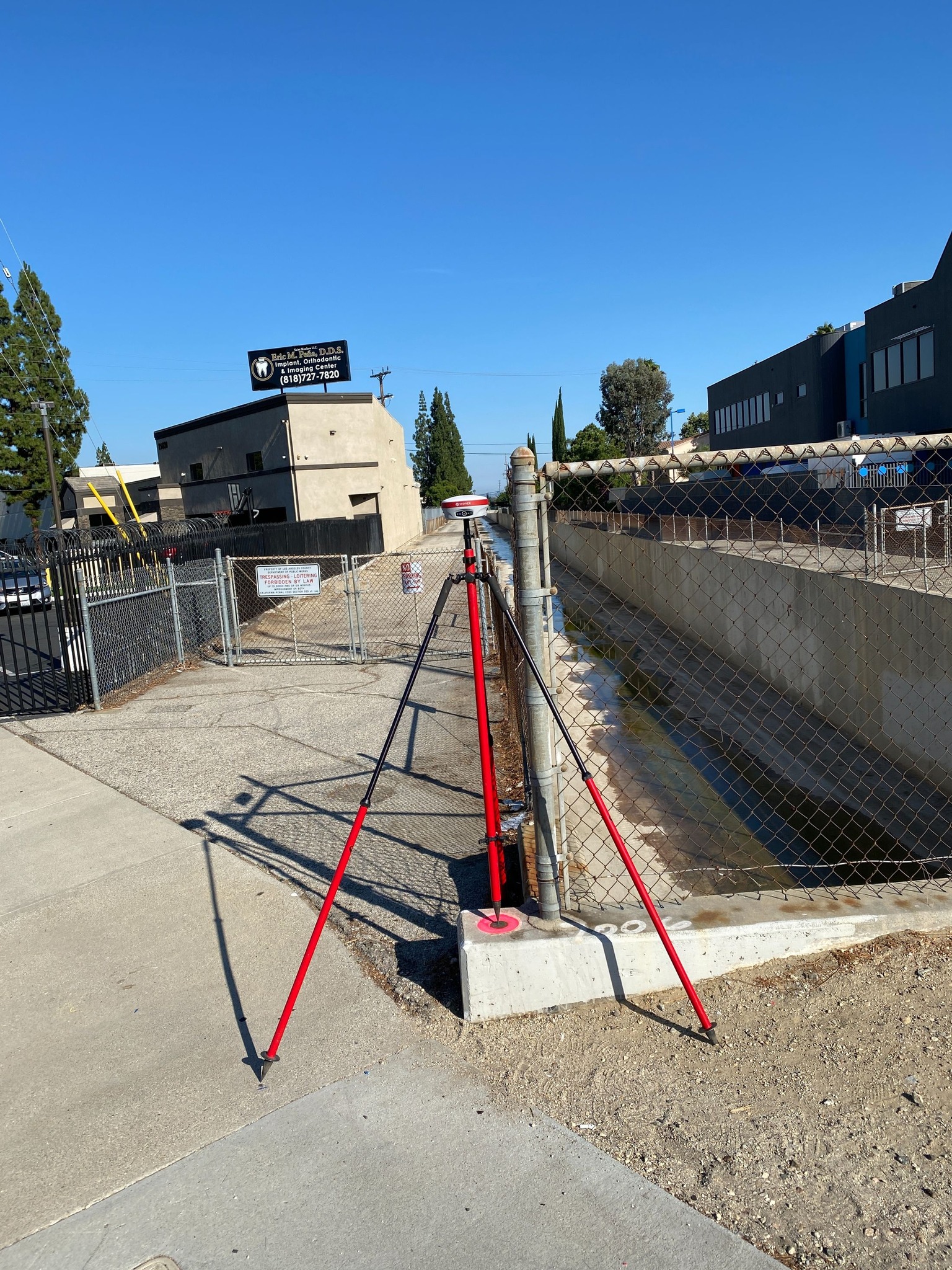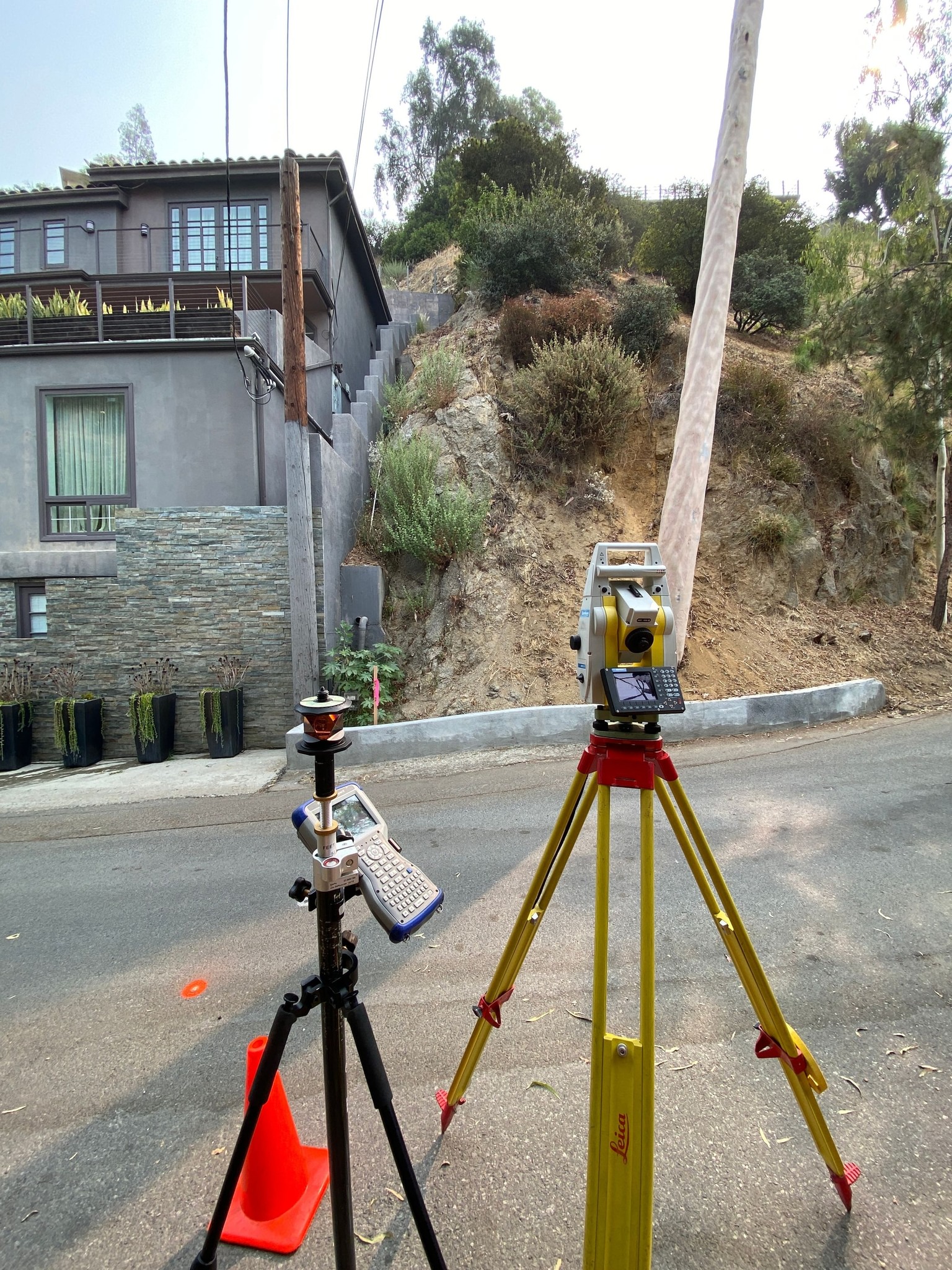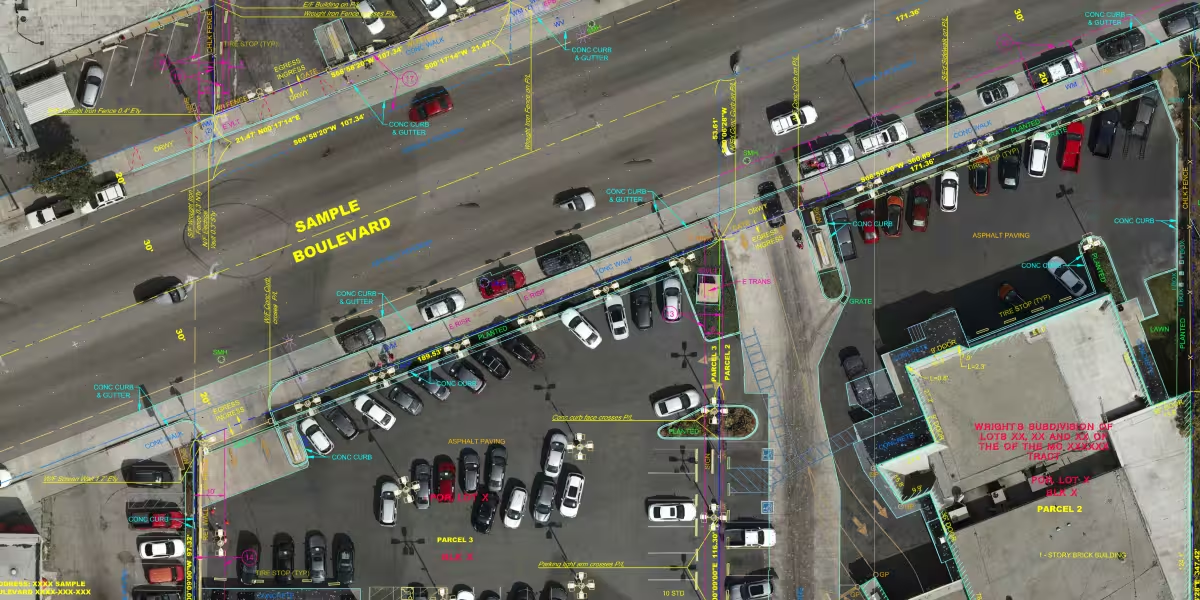
We bring precision and innovation to every project, helping you build with confidence
We believe our services should exceed our customers’ expectations. By using modern technology and striving for constant improvement, we create real value in every project.
Los Angeles, Malibu, La Canada, Glendale, Pasadena, Pacific Palisades, Santa Monica, Topanga, Calabasas, Thousand Oaks
We aim to give you a price that is accurate and defensible—not a guess. For most properties, producing a reliable estimate takes 24–48 hours because we complete a quick due-diligence review that typically includes:
• Record research: Reviewing available deeds, parcel maps, tract maps, Records of Survey, and any relevant record information.
• Scope confirmation: Verifying what you actually need (e.g., boundary corners marked, topo mapping, a plot plan for permits, construction staking).
• Site and access considerations: Identifying potential factors that affect field time, such as terrain, vegetation, fencing, occupied areas, or restricted access.
• Coordination requirements: Confirming any agency, lender/title, architect/engineer, or permit submittal requirements.
• Scheduling and deliverables: Checking current workload and confirming realistic turnaround for field work and final deliverables.
This short review helps prevent changing orders and avoids surprises after we begin. If you have a deadline, let us know—we will do our best to prioritize your estimate.
To order a boundary (property line) survey, we can get started with just a few basics. The more information you provide up front, the faster we can confirm scope, pricing, and scheduling.
Please provide:
• Property address (and city)
• APN (Assessor’s Parcel Number) if available
• Your goal for the survey (examples: fence location, addition/ADU planning, resolving possible encroachment, marking corners)
• Any documents you have (optional but helpful): deed/grant deed, title report, previous survey or corner record, tract/parcel map, site plan, or permit plans
• Access details: whether the property is occupied, gate/lock information, pets, and any access restrictions (rear yard access, tenant coordination, etc.)
• Timeline: your desired deadline or permit submittal date
If you’re not sure what you need: tell us what you’re building or trying to confirm, and we’ll recommend the appropriate scope (e.g., locate/set corners, mark property lines, show improvements/encroachments, and provide a signed survey drawing if required).
Once we receive the address and your objective, we typically confirm the correct scope and provide next steps quickly.
To order a topographic survey, we can begin with the basics and then confirm the exact mapping limits and deliverables based on your project (grading, drainage, ADU/addition, new construction, etc.).
Please provide:
• Property address (and city) and APN if available
• What the topo is for (examples: architectural design, grading plan, drainage study, permit submittal, as-built verification)
• Area to be surveyed
o Entire parcel or a specific portion (front yard only, rear yard, proposed building pad, etc.)
o If you have a sketch or plans, you can mark the limits
• Required deliverables / format
o PDF survey/map, CAD (DWG/DXF), contours at a specific interval (e.g., 1-foot), spot elevations, or a signed/sealed plan
• Any available plans or records (helpful but not required)
o Site plan, grading/civil plans, drainage plans, architectural set, or previous survey/topo
• Site access details
o Occupancy/tenant coordination, gate/lock access, pets, and any restricted areas
• Timeline / deadlines
o Permit submittal date or design schedule
What we typically capture on a topo survey: visible improvements (structures, fences, walls, driveways), surface features, utility features that are observable, and ground elevations/contours—tailored to your project needs and any city/county requirements.
If you share the address and a copy of your site/architectural plans (if available), we can quickly confirm the proper scope and the most cost-effective approach.
Survey pricing can vary significantly—even for neighboring properties—because the scope, research, and required record filing can differ from parcel to parcel. A higher fee does not necessarily mean the work is “more complicated,” but it often reflects additional time, review, and professional liability associated with your specific property and deliverables.
A major driver of cost differences is the required County filing, which is largely determined by the property’s legal description. For example:
• If your parcel is described as a lot in a recorded tract, the work may qualify for a Corner Record filing (typically a smaller exhibit with a more streamlined filing process and lower County fees).
• If your parcel is described by metes and bounds, is a portion of a lot, or involves complex title/record conditions, it may require a Record of Survey (a full map that typically involves significantly more drafting and County review, higher map-check and recording fees, and a longer processing timeline).
Other common reasons your survey may cost more include:
• Different scope of work: Your neighbor may have ordered basic corner marking, while you may need a boundary survey with a signed map, a plot plan for permits, topo, or construction staking.
• Record and monument conditions: Some parcels have clear, consistent records and existing monuments; others require deeper deed/map research, retracement, or setting/replacing corners.
• Easements and encumbrances: Utility, access, and drainage easements can add research and field verification time.
• Site conditions and access: Steep terrain, heavy vegetation, fences/walls, limited rear-yard access, occupied properties, or tenant coordination can increase field time.
• Improvements and potential encroachments: More structures, walls, retaining walls, or suspected encroachments typically require additional measurements and analysis.
• Deliverable requirements: City/county submittals, lender/title requirements (e.g., ALTA/NSPS), CAD deliverables, or tight deadlines can increase effort and review time.
• Timing and scheduling: Expedited service or limited scheduling windows can affect cost.
If you tell us what your neighbor ordered (or share their scope if you have it), we can explain the differences clearly and confirm you are only paying for what you actually need.
In California, a boundary survey is not always “private” work. State law requires that certain boundary survey results be filed with the County Surveyor (and then recorded with the County Recorder) so the updated boundary evidence becomes part of the public land-record system.
Filing is typically required when the field survey reveals items that are not already shown on a recorded map, such as:
• New or different boundary evidence/monuments (property corners found, reset, or set) that are not reflected in existing records
• A material discrepancy or physical change affecting the property line that does not appear on any prior recorded/official map
Why this filing matters to you (the property owner):
• Protects your boundary position by placing the survey findings in the public record
• Reduces future disputes with neighbors by documenting the professional retracement and monumentation
• Helps future projects and transactions (permits, design, construction, refinancing, sale) by making reliable survey information easier to find later
Important note:
Not every boundary survey triggers a mandatory filing. If filing is required (or strongly advisable), we will explain what is being filed (Record of Survey vs. Corner Record), what the county review process involves, and any associated county recording fees as part of your scope.
In most cases, no—we do not file survey documents directly with the City of Los Angeles after the survey is completed.
If a filing is required based on the survey results, it is typically filed with the Los Angeles County Surveyor (and may be recorded through the County). This is most common for certain boundary survey outcomes where a Record of Survey or Corner Record is required or advisable.
If you are working on a permit (ADU, addition, grading, etc.), we can still provide the survey deliverables you need for your plan set submittal—for example a signed PDF and/or CAD (DWG) for your architect or engineer to include with City submittals.
Most boundary surveys are completed in 1–3 weeks from authorization, depending on the property and current scheduling. Some projects can be faster, while others require additional research, field effort, or county review.
What drives the timeline:
• Scheduling and access: Coordinating entry to the site (occupied homes, tenants, locked gates, pets, limited access to the rear yard) can add time.
• Record research complexity: Some parcels have clear recorded maps and monumentation; others require deeper deed/map research and analysis of easements and adjoining record data.
• Field conditions: Steep terrain, heavy vegetation, walls/fences, tight side yards, or extensive improvements typically increase field time.
• Corner evidence and monument recovery: If property corners are difficult to locate, disturbed, or missing, additional measurements and evaluation may be required; in some cases, corners may need to be reset/set.
• Drafting and professional review: Boundary surveys require careful calculations, drafting, and licensed review to ensure the results are defensible.
• Deliverable and agency requirements: If a Record of Survey or Corner Record is required, the county review/recording process can add additional time beyond the field and drafting work.
If you tell us your address and your deadline (for a fence, design, or permit), we can give you a realistic schedule and, when possible, offer expedited options.
For an ADU, addition, or new home design, the right survey depends on whether you are verifying property lines, mapping existing site conditions, or preparing for grading and construction. In many cases, design teams request a topographic survey with boundary information so they can design accurately and submit plans for permit.
Common survey types for ADU/addition/new construction
• Topographic Survey (Topo)
Used for design and engineering. Captures ground elevations/contours and visible site features (structures, fences, walls, driveways, hardscape, drainage features, etc.).
• Boundary Survey / Boundary Verification
Used to establish or confirm property lines and corners—critical when setbacks, fences, or suspected encroachments are involved.
• Topographic + Boundary (combined)
Often the most useful package for architects/engineers because it provides both site mapping and boundary control in one coordinated deliverable.
• Construction Staking / Layout (later phase)
After permits and plans are approved, staking is used to lay out building corners, grids, offsets, pad elevations, and other control points for construction.
Typical deliverables your architect/engineer may request
• Stamped and signed PDF survey map (when required/desired)
• CAD file (DWG/DXF) for design integration
• Contours (commonly 1-foot, but project-dependent) and spot elevations
• Property lines (and corners marked in the field if included in scope)
• Visible improvements and surface features (structures, walls, fences, hardscape)
• Easements shown from record documents (as available), and key annotations useful for design
The quickest way to confirm what you need
Send us:
• The property address/APN, and
• Any architectural/civil plans (even preliminary), or a brief description of what you’re building.
We will recommend the most appropriate survey scope and deliverables so your designer has what they need without paying for unnecessary work.
.jpg)
P
Sep 5, 2025
Marching towards a green futureLorem Ipsum has been the industry’s standard dummy text ever since the 1500s, when an unknown printer took a galley of type …

by Jonathan Lewis
.jpg)
P
Sep 5, 2025
Importance of the mechanic’s lienLorem Ipsum is simply dummy text of the printing and typesetting industry. Lorem Ipsum has been the industry’s standard dummy text ever …

by Jonathan Lewis

P
Jan 19, 2026
WHAT DOES A LAND SURVEYOR ACTUALLY DO?A professional land surveyor provides legally defensible measurements and mapping that support property rights, permitting, design, construction, and risk management. Surveying is not simply “finding property corners.” It is a disciplined process that combines records research, field evidence, measurement science, and professional judgment to establish reliable control for real-world decisions.

by Sergei Builoff